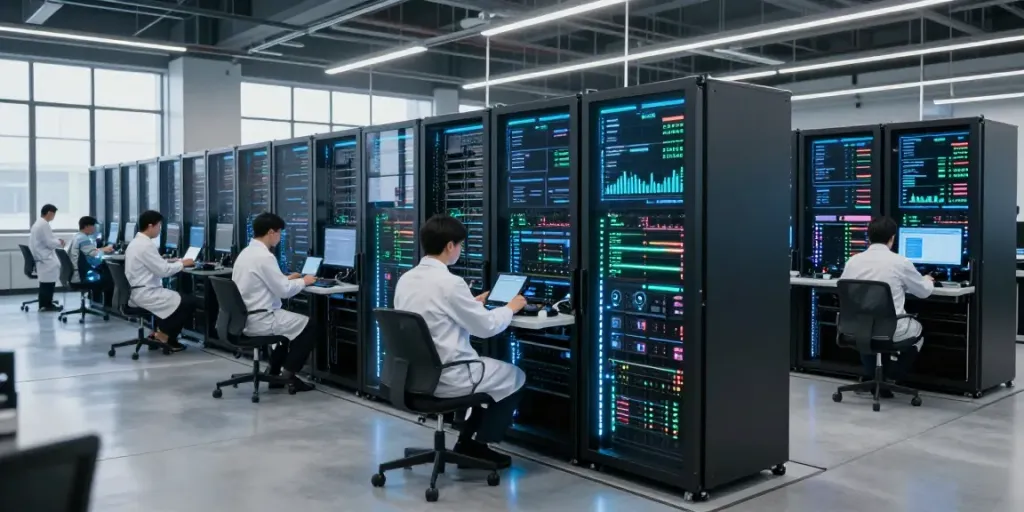
Understanding AI Data Centers
As artificial intelligence continues to revolutionize various industries, the need for robust and efficient AI data centers becomes more crucial. These facilities house specialized IT infrastructure designed to train, deploy, and deliver AI applications and services. With the exponential growth of AI technologies, understanding the intricacies of how these data centers operate is essential for tech professionals and stakeholders alike.
In this context, exploring options like AI data center configurations and power management strategies can provide comprehensive insights into the future of AI infrastructure.
What is an AI Data Center?
An AI data center is a facility specifically designed to accommodate the unique requirements of artificial intelligence workloads. Unlike traditional data centers that primarily support general computing, AI data centers focus on high-density GPU computing, which is pivotal for tasks such as machine learning and deep learning. This specialized infrastructure includes advanced cooling systems, high-performance networking components, and significant power supply capabilities to support the intensive computational demands of AI applications.
Importance of AI Data Centers in the Technology Landscape
AI data centers play a critical role in the tech landscape as they enable organizations to harness the power of AI for various applications, ranging from autonomous vehicles to smart manufacturing. The integration of AI technologies into existing processes necessitates a reliable and scalable infrastructure capable of handling vast amounts of data and performing complex calculations in real-time.
- Scalability: AI workloads can fluctuate dramatically, requiring data centers to scale resources efficiently based on demand.
- Performance: High-performance GPUs and optimized architectures are crucial for reducing latency and improving the overall efficiency of AI applications.
- Energy Efficiency: As AI models grow in size and complexity, power consumption becomes a significant concern. Data centers must prioritize energy-efficient designs to minimize environmental impacts.
The Role of Power in AI Data Centers
The function of AI data centers is heavily reliant on their power infrastructure. Given the energy-intensive nature of AI computations, especially those involving deep learning models, sufficient and reliable power supply is essential. Advanced power management systems ensure that these facilities can deliver consistent power without interruptions, thereby maintaining operational efficiency. Moreover, with increasing attention on sustainability, data centers are adopting renewable energy sources to reduce their carbon footprint.
Power Infrastructure for AI Operations
Power infrastructure is the backbone of any AI data center, ensuring that computational processes run smoothly and continuously. The effectiveness of these systems directly impacts the performance and reliability of AI services offered. Utilizing innovative power plans allows organizations to optimize their energy consumption while supporting AI-centric workloads.
How Power Plans Fuel AI Data Centers
Power plans are structured contracts that define the energy consumption and cost associated with operating AI data centers. These plans can vary significantly depending on the specific needs of the operation, including peak usage times and energy source. Effective power plans must consider both the immediate power needs of the data center and long-term sustainability goals.
- Flexible Contracts: Many AI data centers are adopting flexible power contracts that allow them to adjust based on fluctuating demands.
- Real-Time Monitoring: Advanced monitoring tools track energy consumption, enabling data centers to optimize their operations continuously.
- Load Management: Smart load management systems help avoid peak usage penalties and ensure cost-effective power utilization.
Efficient Power Management for AI Workloads
Efficient power management is vital for AI data centers to minimize operational costs while maximizing performance. Techniques such as dynamic workload allocation and grid-based power sourcing are becoming increasingly common. By analyzing workload patterns, data centers can distribute power more effectively, ensuring peak performance during demanding tasks while conserving energy during quieter periods.
Real-World Examples of Power Distribution in AI Centers
Various leading companies have revamped their energy strategies to align better with AI workload demands. For instance, tech giants like Google and Amazon have implemented AI to optimize their power distribution frameworks, leading to increased efficiency and reduced costs. Through machine learning algorithms, these organizations are not only enhancing operational efficiency but also paving the way for a more sustainable future in AI operations.
Participation in the AI Token Economy
The AI token economy presents a unique opportunity for individuals and businesses to engage directly with AI infrastructure. By participating in this framework, stakeholders can contribute to the operational power of AI data centers while potentially reaping rewards based on their contributions.
Joining the AI Token Economy: How It Works
Joining the AI token economy involves selecting a power plan that aligns with individual or organizational goals. Once a plan is activated, users contribute power to the AI infrastructure and can track their contributions through the platform. This transparency not only enhances user trust but encourages broader participation in the AI ecosystem.
Your Role in Power Contribution
Every participant plays a vital role in the power contribution framework. Depending on the selected plan, users can help support the electricity and computing capacity behind GPU operations necessary for AI applications. This collaborative model not only empowers participants but also creates a more resilient AI infrastructure.
Benefits of Supporting AI Data Centers
Supporting AI data centers through the token economy provides several advantages, including:
- Financial Incentives: Users can earn rewards based on their contribution to the data center's power needs.
- Access to New Technologies: Participants can gain early access to cutting-edge AI technologies and services.
- Community Engagement: Being part of a network encourages collaboration and the sharing of best practices among users.
Challenges and Solutions in AI Data Center Operations
While AI data centers offer immense potential, they also face unique challenges that must be addressed to ensure sustainable operations. From environmental impacts to high operational costs, organizations must implement effective strategies to navigate these concerns.
Common Issues Faced by AI Data Centers
AI data centers are often confronted with several pressing challenges, including:
- High Energy Consumption: The need for significant power resources can strain local energy grids and drive up operational costs.
- Sustainability Concerns: The impact of AI data centers on carbon emissions and local environments is a growing concern among communities.
- Infrastructure Scalability: As AI applications expand, data centers must continuously scale their infrastructure to meet increasing demands.
Best Practices for Managing AI Workloads
To effectively manage AI workloads and mitigate associated risks, organizations can adopt several best practices:
- Energy Audits: Regularly assessing energy consumption and identifying areas for improvement can lead to significant savings.
- Investing in Renewable Energy: Opting for greener energy sources can reduce environmental impacts and improve community relations.
- Utilizing Advanced Software: Implementing AI-driven tools for resource allocation and workload management can enhance operational efficiency.
Future Trends in AI Data Center Infrastructure
The landscape of AI data centers is rapidly evolving, with several key trends expected to shape its future:
- Decentralized Networks: Emerging technologies will likely enable more decentralized AI operations, distributing power needs across smaller, local data centers.
- Increased Automation: As AI matures, automated systems for power management and workload optimization will become standard practice.
- Sustainability Initiatives: Future AI data centers will focus more on sustainability, incorporating green technologies and practices.
Getting Started with Your Own AI Infrastructure Power Plan
Entering the world of AI data centers and contributing to their power needs can be an enriching experience. However, understanding how to select and manage a power plan is crucial for maximizing benefits.
Choosing the Right Power Plan for Your Needs
When selecting a power plan, consider factors such as your energy consumption patterns, budget, and long-term goals for AI involvement. Different plans offer varying levels of support, so understanding these options will allow you to make an informed decision that aligns with your objectives.
Activating and Managing Your Power Plan
Once you've chosen a plan, activating it typically involves submitting personal or organizational information. Management of the plan can often be done through a user-friendly online portal, providing real-time insights into your energy contributions and potential rewards.
Metrics for Evaluating Your AI Data Center Contributions
To assess your effectiveness and impact within the AI token economy, it's essential to track specific metrics. This includes monitoring energy contribution levels, reward accrual, and overall performance comparisons with other participants.
What is an AI data center?
At its core, an AI data center is a specialized facility designed to meet the computational and power needs of AI applications. This infrastructure plays a pivotal role in the evolution of AI technologies across various industries.
How do AI data centers differ from traditional data centers?
The primary distinction lies in their design and operational focus. AI data centers utilize high-density GPU computing and are optimized for machine learning and AI-specific workloads, whereas traditional data centers may support a broader range of general computing tasks.
What are the environmental impacts of AI data centers?
AI data centers can contribute to significant energy consumption and carbon emissions. However, many organizations are actively working to mitigate these impacts through sustainable practices and renewable energy investments.
What are the cost factors associated with AI data centers?
Cost considerations for AI data centers typically involve energy expenses, hardware procurement, maintenance, and operational staffing. Understanding these factors helps organizations budget effectively and plan for future growth.
How can individuals participate in AI infrastructure?
Individuals can engage with AI infrastructure by choosing power plans that align with their interests and goals in the AI token economy. This participation allows for contributions to the power needs of AI data centers without the necessity of owning physical infrastructure.