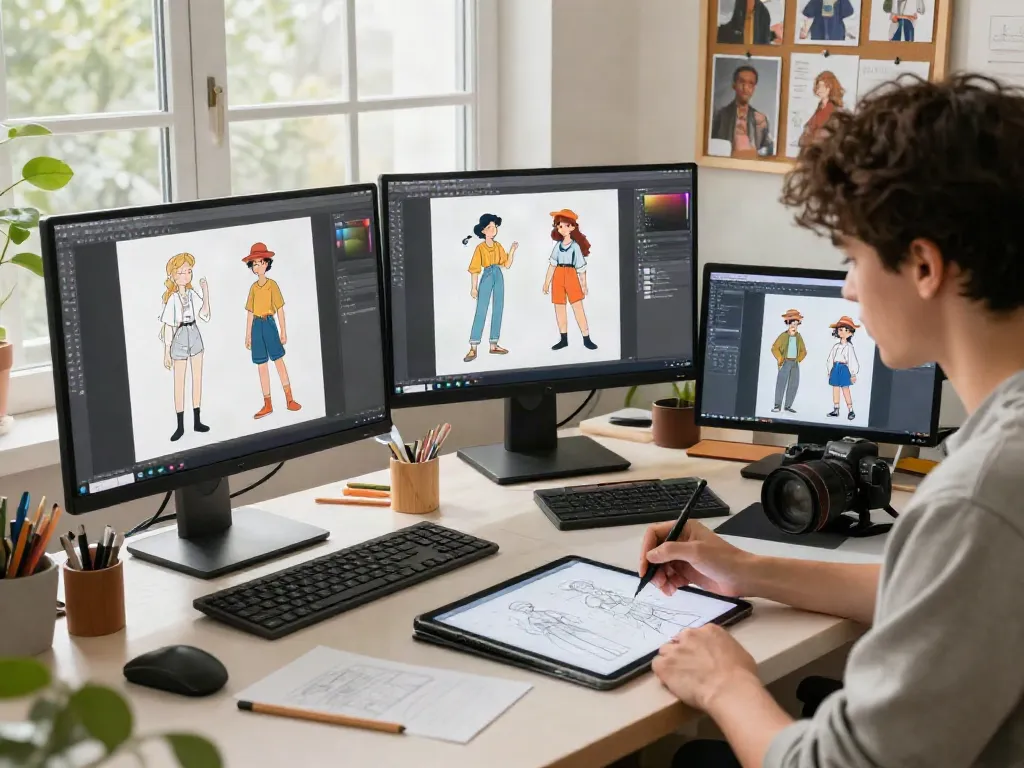
Understanding the AI Character Sheet Generator
In today's dynamic creative landscape, the ability to generate consistent and visually cohesive characters is essential for designers, authors, and animators alike. An AI character sheet generator offers a breakthrough solution by enabling creators to develop characters that remain true to their identity across various poses, outfits, and artistic styles. This tool leverages advanced artificial intelligence to streamline the character creation process, ensuring that the essence of a character is preserved no matter how many times it's depicted.
What is an AI character sheet generator?
An AI character sheet generator is a sophisticated software tool that helps users create detailed character reference sheets automatically. These sheets typically include multiple views of a character—front, side, back, and various poses—painting a comprehensive picture that is invaluable for artists and storytellers. The generator's strength lies in its ability to maintain visual consistency across different iterations of the character, thereby eliminating discrepancies that often arise when artists interpret a character from memory or a single reference image.
How does it improve character consistency?
Character consistency is crucial in visual storytelling, especially in mediums like comics, animations, and video games, where the same characters appear repeatedly across various scenes. Traditional methods of character design often lead to slight variations based on different artists’ interpretations, which can confuse the audience. AI character sheet generators mitigate this issue by saving key identity elements, such as facial features, body proportions, and unique markings. This means that regardless of what pose or outfit is being illustrated, the core characteristics of the character remain intact.
Key features to look for in 2026
- Multi-angle views: Ensure the generator provides front, side, and back views to offer a complete perspective.
- Customizability: Look for tools that allow users to input specific character traits and styles.
- AI-powered adjustments: The ability for the tool to learn and adapt from user inputs enhances the consistency of character generation.
- Export options: The ability to export character sheets in various formats is crucial for flexibility in use.
- Integration capabilities: The generator should easily integrate with other design and animation software.
Creating Characters from Scratch
Usability is core to an effective AI character sheet generator, but how these tools are used significantly impacts the quality of the output. Here’s how to effectively harness this technology to create compelling characters from scratch.
Using text prompts effectively
Text prompts can be powerful tools in guiding the AI to generate character traits. Specificity is key; instead of vague descriptors, include detailed attributes such as age, gender, and personality traits. For instance, instead of saying "a young hero," try "a 12-year-old girl with bright green eyes, rebellious spirit, and a penchant for adventure." The more descriptive the prompt, the better the AI can align the output to your vision.
Incorporating visual references
While text descriptions are useful, pairing them with visual inputs can enhance the character generation process. Users can upload photos or sketches that embody the desired characteristics of the character. The AI uses these images to create a unique character sheet, capturing nuances that may be difficult to express in words, such as specific facial expressions or clothing styles. This multimodal approach leads to richer and more personalized character designs.
Best practices for character descriptions
When crafting character descriptions for an AI generator, consider the following best practices:
- Be clear and concise: Avoid overly complex language that may confuse the AI.
- Prioritize key traits: Focus on the most distinguishing aspects of the character first.
- Iterate and refine: Don’t hesitate to adjust descriptions based on the output you receive; use trial and error to refine your results.
Real-World Applications of AI Character Sheets
AI character sheet generators are not just theoretical; they have practical applications across various industries. Understanding how these tools are used can help aspiring creators visualize their potential.
For illustrators and animators
Illustrators and animators benefit significantly from AI character sheet generators. By ensuring visual consistency, these tools save time during production. For example, an animator working on a short film can utilize a character sheet generated by AI to maintain the look of the character across multiple scenes, thus preserving the character's identity in every frame.
In gaming and character design
In the gaming industry, character design plays a pivotal role in player immersion. An AI character sheet generator allows game developers to create a roster of non-player characters (NPCs) with unique appearances but consistent visual traits that enhance the gaming experience. Characters can be designed to fit different environments while retaining their core identity, allowing players to recognize them easily.
Case studies of successful implementations
Innovative teams have embraced AI character sheet generators for their projects. For instance, a small indie animation studio used such a tool to design characters for their web series. By utilizing the AI-generated character sheets, they ensured uniformity across episodes, effectively capturing the audience's attention without the distraction of inconsistent character appearances.
Troubleshooting Common Issues
While AI character sheet generators offer numerous advantages, users may encounter challenges that could impede the creative process. Addressing these issues effectively can optimize your experience with these tools.
Addressing inconsistencies in generated characters
Inconsistencies can arise from ambiguous prompts or inadequate visual references. If the output does not match your expectations, revisit the input parameters. Adjust your descriptions for clarity and ensure you include multiple unique references to guide the AI accurately. This iterative process will enhance the alignment between your vision and the generated output.
Optimizing input data for better results
Providing high-quality, diverse input data can significantly improve the generated characters’ quality. This means not only maintaining clear descriptions but also choosing reference images that have various angles and expressions. A well-rounded set of input data can lead to more dynamic and compelling output from the AI.
Understanding limitations of technology
Despite their sophistication, AI character generators have limitations. They may struggle with highly detailed or abstract prompts, leading to unexpected results. Users should remain aware of these limitations and adjust their expectations accordingly. Understanding that perfection may not always be attainable is an essential part of working with these innovative tools.
The Future of Character Design with AI
As technology continues to evolve, the future of character design through AI holds exciting possibilities. Keeping an eye on emerging trends and technologies is crucial for creators looking to stay ahead of the curve.
Trends shaping character design in 2026
In 2026, character design is expected to be increasingly influenced by artificial intelligence. Personalization will become a cornerstone of character creation, as tools will allow even greater customization based on user input. This trend toward individualized characters means that creators will be able to design unique characters that resonate with their audiences on a deeper level.
Emerging technologies in AI character generation
New technologies are paving the way for even more advanced AI character generation. Enhanced machine learning algorithms will lead to more sophisticated understanding of characters’ personalities, making it possible to generate characters that not only look consistent but also embody traits that make them relatable and compelling.
Advice from industry veterans on adaptation
Industry veterans emphasize the importance of adaptability when using AI tools. The ability to pivot and adjust designs based on the AI's output is crucial. They recommend that creators embrace a collaborative approach with AI—a partnership where human creativity and AI efficiency combine to produce outstanding character designs.
What can an AI character sheet generator do for my project?
An AI character sheet generator can streamline your character design process, ensuring that your characters maintain visual continuity throughout your project. Whether you are creating a series of illustrations, animations, or video game assets, this tool allows you to focus on storytelling while the generator takes care of maintaining character integrity.
Are there free AI character sheet generators available?
Yes, there are several free AI character sheet generators available online. While they may not offer the full range of features found in premium tools, these free options can still provide a valuable starting point for creators looking to experiment with character design.
How can I make my character unique?
Making your character unique involves blending distinctive traits with relatable qualities. Focus on creating a backstory that informs their appearance, behavior, and motivations. Using personalized elements such as unique markings, outfits, and quirks will make your character memorable and engaging.
What formats can I export my character sheets in?
Most AI character sheet generators offer various export options, including popular formats like PNG, JPEG, and PDF. This versatility ensures that your character sheets can be used across different platforms and for numerous applications, from digital art to print media.
Can I use my photo to generate a character?
Many AI character generators allow users to upload their photographs to create unique character representations. By analyzing the provided images, the AI can generate character sheets that reflect the specific features and traits found in the uploaded photos, resulting in personalized character designs.